In this conversation, Clarasys consultant Ellen Brownings sits down with Informa’s Head of Workplace Colleague Experience, Sheena Vadher, to unpack how Informa has transformed offices across London, Dubai, Istanbul, Singapore and Mumbai into truly people‑first spaces.
Rather than treating office moves as a purely logistical, “bricks and mortar” exercise, Informa and Clarasys focused on the colleague experience from day one – involving people early, listening to their concerns, and designing spaces and technology around how they really work.
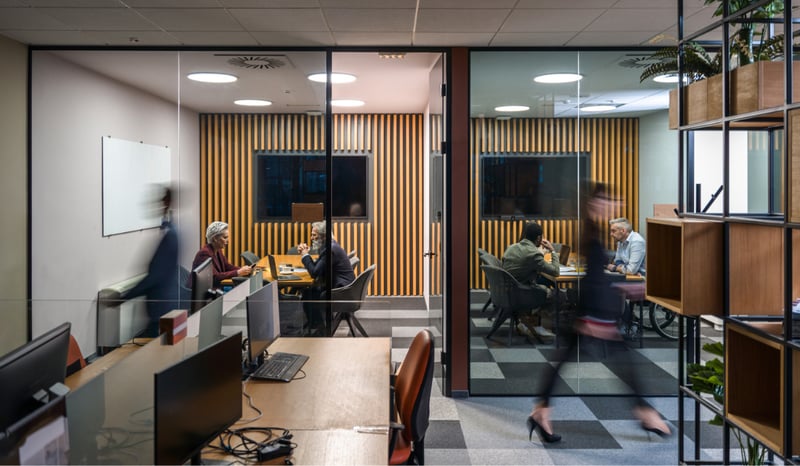
From flexible “orbits” and collaboration zones to escape pods and tech‑enabled meeting rooms that “just work”, the programme set out to create workplaces that are both human‑led and technology‑enabled.
Ellen and Sheena explore how they navigated cultural nuances across global locations, brought multiple internal teams and rep groups together, and measured impact with standout results – including 94% of colleagues feeling move‑ready and 100% feeling tech‑ready on day one in Dubai and Istanbul.
They also share practical tips for anyone planning an office move or wider workplace transformation, and reflect on what it takes to build a partnership that feels like one team working towards a shared goal.
Watch here, or read on for an edited transcript.
Ellen Brownings: Hi, I'm Ellen. I'm from Clarasys, a management consultancy. I specialise in people and organisational change, so transformations focusing on culture, people change, and also sort of the technology side, so anything to do with AI.
And today I'm joined by Sheena Vedher, and you're from Informa, Head of Workplace Colleague Experience. So thank you for joining, Sheena.
Sheena Vadher: Thanks, Ellen. Good to see you.
Ellen Brownings: Good to see you always. And just wanted to chat to you today about what we've been doing, how we've been working together.
Putting colleagues at the heart of global office moves
Ellen Brownings: Informa have gone through a lot of change recently, new offices all around the world, so maybe you could give a bit of an intro to the context and the project we've been doing.
Sheena Vadher: We've had a real opportunity with our office transformation programs over the last couple of years. So in London, Dubai, Istanbul, Singapore, and most recently, in Mumbai, and trying to create spaces where we're really trying to think about the colleagues and putting them at the heart of it, and also thinking about how we create spaces to really reflect Informa's culture.
Beyond bricks and mortar: Fixing the missing change journey
Sheena Vadher: We have done office moves [before], but I think the biggest piece missing in that puzzle was the change journey and us thinking about our colleagues. I believe colleagues felt they weren't part of the process or they weren't informed of changes going on, or not informed at all, actually. So we had a real opportunity to make a difference with these programs.
Choosing a human-led partner for workplace transformation
Sheena Vadher: It was really important for us to find and work with a partner who really understood what it would take to actually get an office transformation over the line. And I think the Clarasys team really brought their human-led expertise into it to really help us build out the colleague experience design, and how we approach these programs differently.
It's not just about bricks and mortar; it's about how we get these people on the journey from the get-go, so we're not just telling them a week before or a day before 'cause there's so much change involved.
It wasn't about us finding somebody who could just put together a project plan and help us with the logistics of the move itself, but really help us think about each moment and how that's gonna impact somebody and get them on the journey, work across all of our different teams to make it happen too, and the Clarasys team just got it from the beginning. It was an absolute joy to work with the team.
Designing the colleague experience: Listening, feedback and cultural nuance
Ellen Brownings: I think holding space is so important during any sort of change. I think people often just want to be able to feel like they're being listened to, and holding an environment where, yeah, they can give feedback on thoughts and worries and also what they'd love to see more of for the launch week, for example.
So I think that was super important. And the cultural nuances that we experience with all of these different office moves. There were very different things that were important to different places, so I think it was even more so important that we led with the people aspect, and then made sure that the logistics and the planning sort of wrapped around that.
Sheena Vadher: And I think that's a really key point around the cultural nuances. I think Clarasys really helped us to really understand and appreciate that not one size fits all, and actually thinking about the cultural nuances across our different offices globally.
We are a global business, and thinking about how someone communicates and engages in Mumbai is going to be very different to those in Singapore and to London and that was actually a really key part we focused on. And as you know, with Istanbul, writing communications in another language and working with that team and getting them on board was so key to the success of it all.
Human-led, tech-enabled: Making office technology effortless
Ellen Brownings: And in terms of the technology, that was a really big focus for a lot of these office moves. We wanted to make sure it was human-led but technology-enabled. So what were the highlights for you in terms of the tech in these new spaces?
Sheena Vadher: Technology and an office space, they come hand in hand. I think many, many, many years ago that wasn't necessarily the case. An office was always built thinking about the space, and then the technology was somewhat of an afterthought. How can we then make technology work in this space? Mm. And what we've found over the years is actually that they do need to work together, and we also need to think about what a colleague actually needs when they do come into an office. As much as people are, you know, at the centre of what we do, technology is also at the centre of what we do.
So I think initially with all these office moves, we've had colleagues who've been quite sceptical about changes and not wanting to kind of move away from desks and thinking, are we gonna have enough desks in an office, and are we gonna have enough meeting rooms and spaces, and not quite sure about how the technology is gonna work.
It's actually been a great thing to see colleagues walking into these offices and walking into a meeting room where we've kitted it out with Microsoft Teams integration. So you literally walk into a room, you click ‘Join’, and you're in. You're in on a call. It just works. There's no friction. It's easy.
Our technology is so intuitive, and I think that when you think about technology and using technology, you often think about training as well. But the fact we've not had to do any of that just shows that people can then just come in and get on with it. It's just simple.
From desks to dynamic spaces
Sheena Vadher: The other thing we've really thought about is the spaces and how people actually work and use the space. So we've got a range of different spaces within our offices. So just behind us we've got the lovely orbits. We've got pantry spaces, and they're really great for just socialising and events, and they can be transformed into town halls.
Ellen Brownings: Yeah.
Sheena Vadher: We have flexi rooms, so they're a combination of an exec office and a meeting room space, if available. And we've got a number of different collaboration spaces, as well as individual spots, like an escape pod, where you can go in and just take a personal call on the fly.
And what we've seen is where we've had colleagues kind of obsess that they need a desk, you know, they've actually come in, and it's just been great to see people actually utilising the space. And it creates a real buzz and energy around the office when you see people moving around. So it's been working and hopefully will continue that.
Right-sizing office space: Balancing capacity, buzz and flexibility
Ellen Brownings: That's been the biggest shift that I've seen with this office move is really placing emphasis on how do you design an office that caters to all the activities in someone's day, and also how that works with kind of occupancy, and it's the ongoing, sort of task that when buying an office, trying to figure out how much space you actually need, figuring out when people are gonna be in the office.
I think if you have flexible spaces which are multi-use, you know, if there's a meeting room that's not being used, or an exec office that's not being used, you can turn that into a meeting room. I think having that level of flexibility means that there's not that frustration of not having enough space, and actually people can enjoy the workplace. There's a buzz to it as well, keeping that balance between enough space for everyone and good energy in the office, having enough people around. I think Informa have done that really well with their space design.
Sheena Vadher: Thanks to the Clarasys team
Ellen Brownings: Thanks to the Clarasys team - thanks very much!
Top tips for a successful office transformation
Ellen Brownings: If you were recommending to the next person who was starting an office transformation, what are the top tips that you would give them? What sort of things should they keep in mind?
Sheena Vadher: The process is just as important as the outcome. And I think for me, the biggest thing we've seen is thinking about colleagues - I think that's just the most important thing.
Ellen Brownings: There are so many teams involved with these sorts of moves, and as you said, collaboration from really early on actually is so key to making sure the real estate team are on board with the comms team, are on board with the office facilities front of desk. All of those teams need to be brought in on that. And, like, the rep groups, you know, we started those maybe three, four months out, so that was meeting colleagues every week before we got actually into the move. So there weren't any unexpected surprises by the time that we got there.
People felt like they'd really helped design the space, and I think that was what was really important for these moves and being led by that, rather than sort of just a procurement decision or just a logistical move.
Sheena Vadher: Hearing feedback from colleagues on day one and just seeing smiley, happy faces - this is why we do what we do, just to have that moment.
Measuring impact
Sheena Vadher: Thinking about Dubai and Istanbul, some stats from those two offices - 94% of our colleagues felt ready, which is great because that just shows how important that change journey is. So all of the work that we did with the rep groups and getting them on that journey and spending time with them to hear their concerns and just listening, I guess, you know? We can't change and fix everything but I think our main thing was just hearing them and then saying, "It's okay. It's gonna be good. You're gonna be great. You're gonna be fine."
Going back to the point around our technology being so intuitive, 100% of the colleagues in Dubai and Istanbul felt tech-ready from day one, and I think that just speaks volumes.
A true partnership: How Clarasys integrated into the Informa team
Sheena Vadher: The relationship that we built with the Clarasys team didn't feel like it was an external partner coming in to work with us. You've really just blended in, not just with the colleague experience team, but with all those other teams we've mentioned, and it just felt so natural.
And I think that's so key when working on these programs, especially when you're having to travel back and forth and be immersed in a new office with a brand-new team. But you were very much part of the team, and that was, I believe, the driver for the success of the projects.
Ellen Brownings: It definitely felt like that, you know, really felt like we were part of the team, and from day one, co-locating, getting to know you and the rest of the teams that were involved. I think you're absolutely right. The amount of travel, the intensity of the projects- so much time and effort went into these, and I think having that close relationship and being able to work effectively as a team was really key to this.
Thanks for joining me.
Sheena Vadher: Thanks, Ellen.
Planning an office move or wider workplace transformation? Clarasys helps organisations connect people, culture, technology and change so new spaces work for colleagues from day one.
Explore our business transformation and change management services, see how we help improve employee experience, or get in touch to find out more.